Download our job description template
26 Mar, 2026


By Oliver Amos
For many employers, the introduction of Salary Transparency has been tricky to navigate. Many organizations are uncertain about what its introduction means for them regardless of their location.
If you’re feeling the same way, keep reading for our guide on how to navigate Salary Transparency in New York City and California:
New York City introduced the Salary Transparency Law on November 1st, 2022 ahead of the state of California, which introduced its own version on January 1st, 2023. Similar laws exist in the states of:
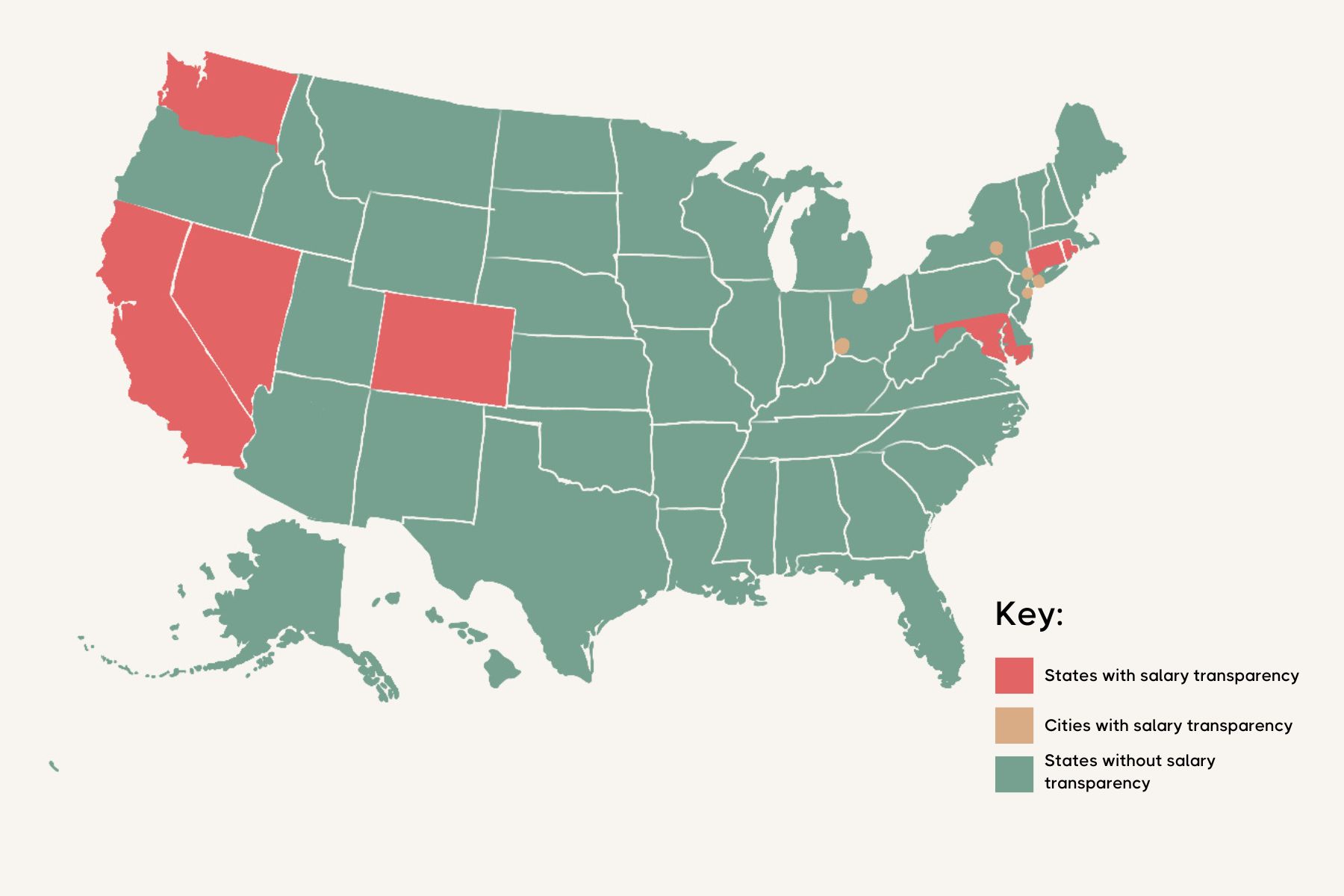
It's expected that more states will follow once lawmakers have seen Salary Transparency in action and have a better understanding of how it will impact businesses.
The introduction of the Salary Transparency Law has made it unlawful for businesses to post a job advertisement for a role based in the states or cities that have introduced the law without including a minimum and maximum salary. Vacancies must cite a lower and upper band, as averages will not be sufficient. If the salary is fixed and there is no flexibility around salary, both bands can be identical.
Any role that will be performed in these areas, be it from an office or remotely, is covered by the law.
The law is applicable to businesses and third parties, including employment agencies advertising a vacancy on behalf of an employer. Pay ranges need to be included in the job description itself and should not link away to any external material. Bonuses, tips and other benefits do not need to be cited, but commission rates should be included.
There are some notable differences between the two states...
There have been some questions around whether or not Salary Transparency is a good thing, with reports of some organizations including ridiculously large pay ranges in order to avoid the law. However, we would strongly advise against this.
Not only will organizations avoiding the laws face penalties, but there are also a number of benefits to the introduction of Salary Transparency.
Both states introduced the law to improve pay equity and decrease the gender pay gap. The Salary Transparency Law breaks makes pay brackets accessible for all, allowing them to see if they’re being underpaid.
By including salaries in job descriptions, applicants are aware of the full compensation package at the very beginning of the process. This means candidates will only apply for the role if the salary is suitable to them and their skill sets, creating a better recruitment experience for hiring managers, applicants and recruiters.
In fact, 82% of respondents to a recent LinkedIn survey said that it gives them a more positive impression of a company when they include salary ranges in a job description.
Including salary ranges on job descriptions is certainly likely to increase the number of applicants your vacancy will receive. According to the same LinkedIn survey, 91% of respondents said that including salary ranges in a job post impacts their decision to apply.
There are a number of things that employers can do to ensure they’re well-prepared for Salary Transparency and continue attracting and retaining top talent...
If they haven’t been already, it’s important to make sure all job listings published before the introduction of the Salary Transparency Law (November 1st for New York City and January 1st for California) are up to date and include minimum and maximum salary bands.
With so little salary information available before now, it has been nearly impossible to benchmark salaries to ensure employees are being paid fairly. Now, this information is readily available to employers and candidates alike. The Salary Transparency changes have made it easy for employees to see if they are being underpaid and move roles for a pay raise.
As a result, we would recommend employers to create a centralized database of salary bands for each role in the business and update this information on a regular basis. This will help ensure that employees are paid fairly, equally and competitively.
Lots of factors can impact salaries. It's common to see salaries fluctuate depending on market and economic behavior, so it’ll be crucial for companies to stay up to date with these changes by benchmarking salaries regularly. This is vital for retaining and attracting staff, as employees will want to know that their income is in line with the rest of the market.
Looking for up to date salary advice? Our headhunters can share the latest market rates personalized to your buesiness, get in touch with our specialist marketing and sales recruitment consultants.
It’s vital that Salary Transparency is understood by all organizations hiring in the United States, including those outside of the applicable areas. This is especially important for those looking to hire remotely or wanting to beat the competition for the best talent on the market.
New York City, California and Washington are major talent hubs, so it’s only natural that they’re among the first states to introduce Salary Transparency. If these areas see successes with the law, it won’t be long before more states and cities follow in their footsteps.
Remote working is now engrained in our culture and an excellent way to secure top talent. In fact, to accommodate remote teams, many organizations have set up hubs in states and cities to allow teams to meet in-person when they need to.
While companies do not need to be based in New York City or California in order to hire there, it’s important to know that their hiring efforts there will still fall under the Salary Transparency Law. Any role that will be performed in New York City or California, be it from an office or remotely, is covered by the law. As a result, all job descriptions will need to include salary information in order to be compliant.
Companies who aren’t hiring in New York City or California should still consider disclosing salary in order to secure top talent. Many candidates find it frustrating when salary information is unavailable. A recent report from Visier has found that Salary Transparency is incredibly important to job searches, with 68% of respondents saying they would switch employers for greater pay transparency, even if their pay remained the same.
Plus, Salary Transparency has made pay information more readily available. Glassdoor have reported an uptick in the number of employers disclosing salaries, especially in areas just outside of New York City. They have described a “spillover effect” in the states of New Jersey, Connecticut and New York State excluding New York City. The number of jobs in these areas disclosing salaries has increased 6% from October 1st to November 12th, 2022.
If you're looking to hire go-to-market talent in New York or California, our expert recruitment consultants can help. Get in touch with us to learn more about how we can support your talent search.