
Today, we’re releasing the 3Search 2026 Annual Pay & Hiring Report. Built from insights gathered from more than 1,400 professionals, alongside our own recruitment data and market observations. Below, we explore some of the key themes shaping the 2026 recruitment market.
2026 hiring trends at a glance:
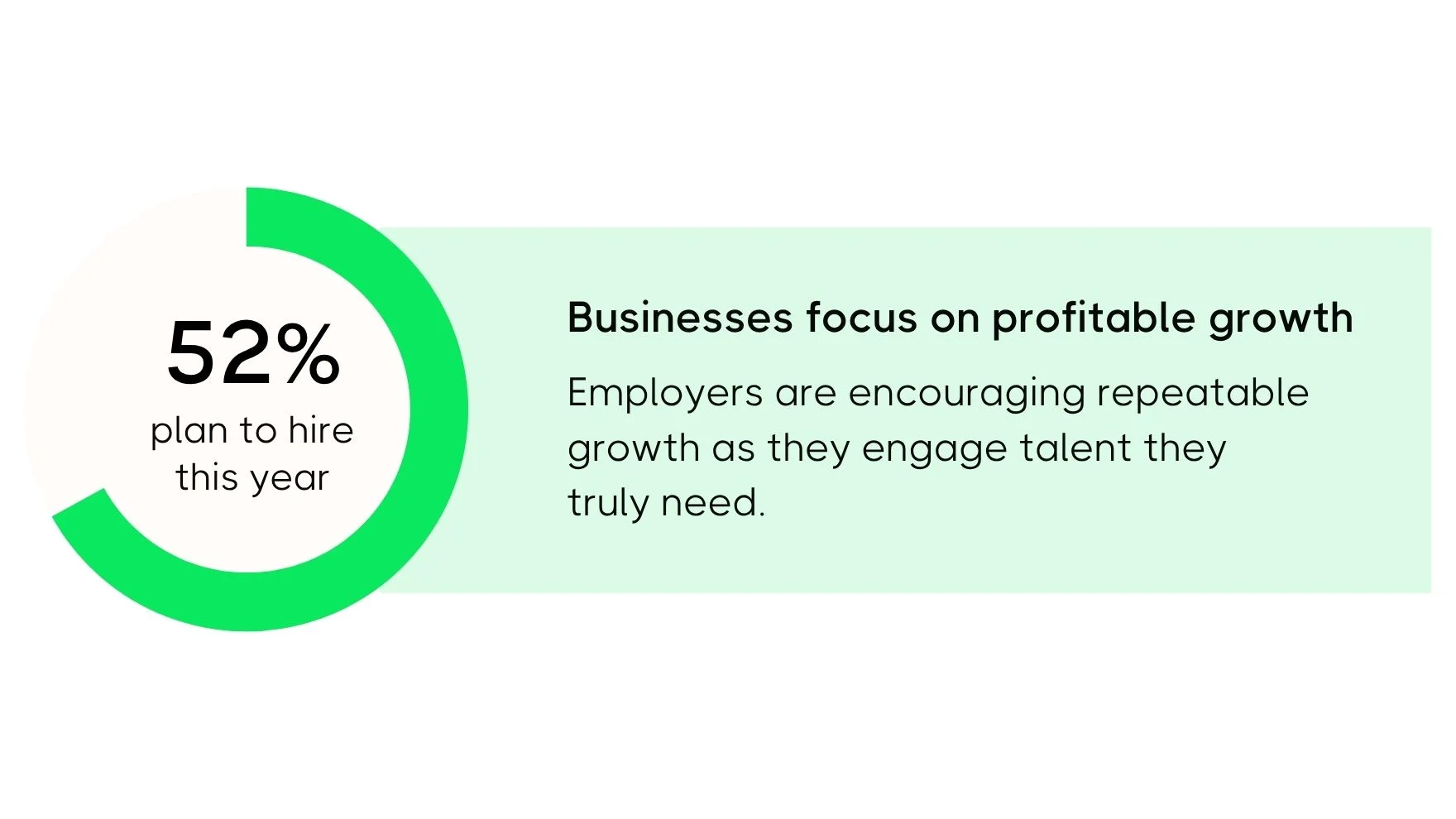
- Hiring is active, but more selective: 52% of employers plan to hire, focusing on fewer, high-impact roles
- Talent remains highly mobile: 62% of professionals are considering a move in 2026
- Salary still leads decision-making: but expectations around fairness, progression and value are increasing
- Company culture is now a key differentiator: rising significantly in importance year-on-year
- Workloads are increasing across most teams: becoming a major (and often hidden) driver of movement
- AI is reshaping roles and skill requirements: with practical application now expected, not optional
The result is a market that remains active, but is far more measured. Confidence is returning, but it’s cautious, and we expect hiring rates to fluctuate as the year progresses. Ultimately, recruitment is still happening, but it is more selective. Talent is still moving, but expectations are changing on both sides.
1) A more selective approach to growth
More than half of hiring managers plan to hire this year, signalling continued movement across themarket. However, the nature of that hiring has clearly changed.
Rather than broad expansion, businesses are focusing on targeted, high-impact hires. These are marketing, sales and digital roles that directly influence revenue, performance or long-term growth. We expect organisations to revisit recruitment plans more frequently as workforce planning must remain responsive to economic conditions.
The result is a more nuanced landscape: fewer job postings overall, but greater importance placed on each one.
2) Commercial hires are re-evaluating
Despite a more measured hiring environment, marketing, sales and digital talent remains mobile.
Our data shows that 62%* of professionals are considering a move in 2026, reflecting a workforce that is actively reassessing their current situation.
This shift is being driven by a combination of factors:
- Increased workloads
- Slower salary growth
- Changing expectations around work and progression
For many professionals, the past year has prompted a broader reassessment of what they want from their careers.
*This number tends to be higher for recruitment agencies, as we are uniquely connected to passive and active talent pools.
3) Pay still leads, but candidate expectations are shifting
Salary remains the most important factor for those looking for a new role, with over 40% of professionals ranking it as their top priority. However, with salary growth stabilising, expectations are becoming more nuanced.
Candidates are not only focused on pay, but also on:
- Whether they feel fairly rewarded
- Clear progression opportunities
- Company culture
For employers, this means that competitive pay remains essential, but cannot be the only lever when attracting and retaining talent.
4) The growing importance of company culture
As flexible working becomes standard across many sectors, differentiation is shifting elsewhere. One of the clearest trends this year is the rising importance of company culture. Candidates are increasingly focused on:
- How teams collaborate
- The reality of day-to-day working life
- How organisations support development and wellbeing
Ensuring that you are effectively communicate your company culture throughout your employer brand is key to attracting top talent.
5) AI is reshaping roles and expectations
Artificial intelligence is beginning to have a tangible impact on hiring decisions, team structures and day-to-day responsibilities.
Many professionals report that AI has already changed role requirements, with new skills emerging across disciplines. There is also a growing expectation that candidates demonstrate practical use of AI, rather than just awareness.
While still evolving, AI is likely to continue influencing:
- How work is delivered
- How teams are structured
- The skills required to succeed
As access to AI tools becomes more widespread, differentiation will increasingly come from how organisations apply the technology, rather than the technology itself. At this point, your talent will be key.
6) Soft skills are just as important as technical skills
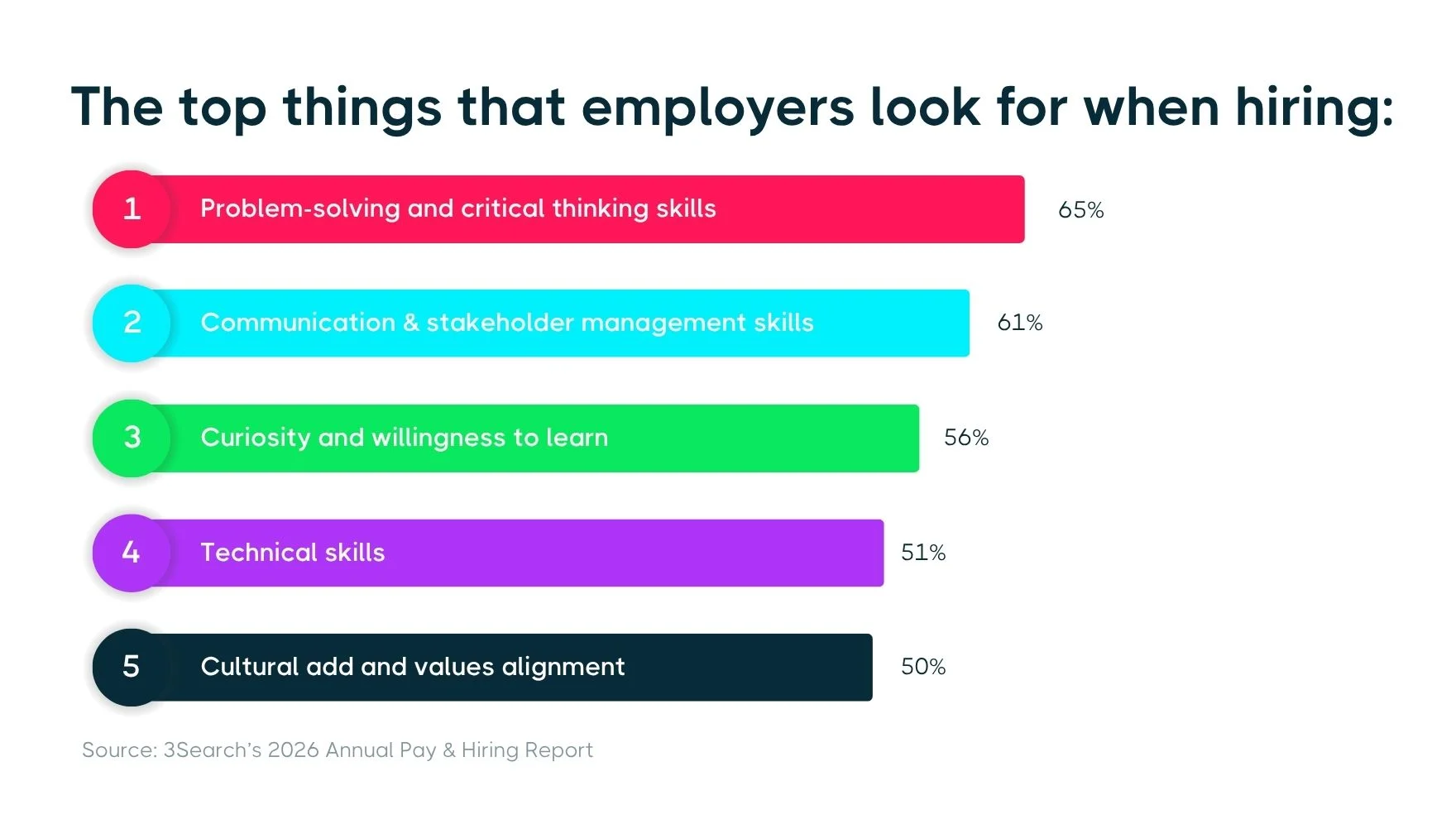
Employers are clearly placing emphasis on soft skills in 2026. 30% of employers report that the identification of genuinely qualified candidates is making recruitment processes challenging. That's why the top five things employers are looking for are:
- Problem-solving and critical thinking skills
- Communication and stakeholder management skills
- Curiosity and willingness to learn
- Technical skills
- Cultural add and values alignment
A more considered hiring environment
Together, these trends point to a hiring market that is more deliberate and balanced than in recent years.
- Employers are hiring but with greater scrutiny
- Candidates are open but more selective
- Hiring processes are becoming more thorough and considered
In this recruitment market, success depends on clarity around expectations, value and alignment on both sides.
Explore the full report
The full report explores these trends in more detail, alongside:
- Salary benchmarks across key disciplines
- Hiring trends from the past 12 months
- Talent attraction and retention insights
- The evolving impact of AI on teams and roles
Download the full 2026 Annual Pay & Hiring Report to explore the findings in more depth.
More resources
3Search is one of the UK's best go-to-market recruitment agencies, hiring across marketing, sales, digital, product and RevOps. Explore more of our resources built to support your growth journey: