

As the adoption of artificial intelligence accelerates, data and evidence are often left behind. It’s becoming increasingly apparent with technology moving at the pace it is, that solid data - the cornerstone of success - is being forgotten.
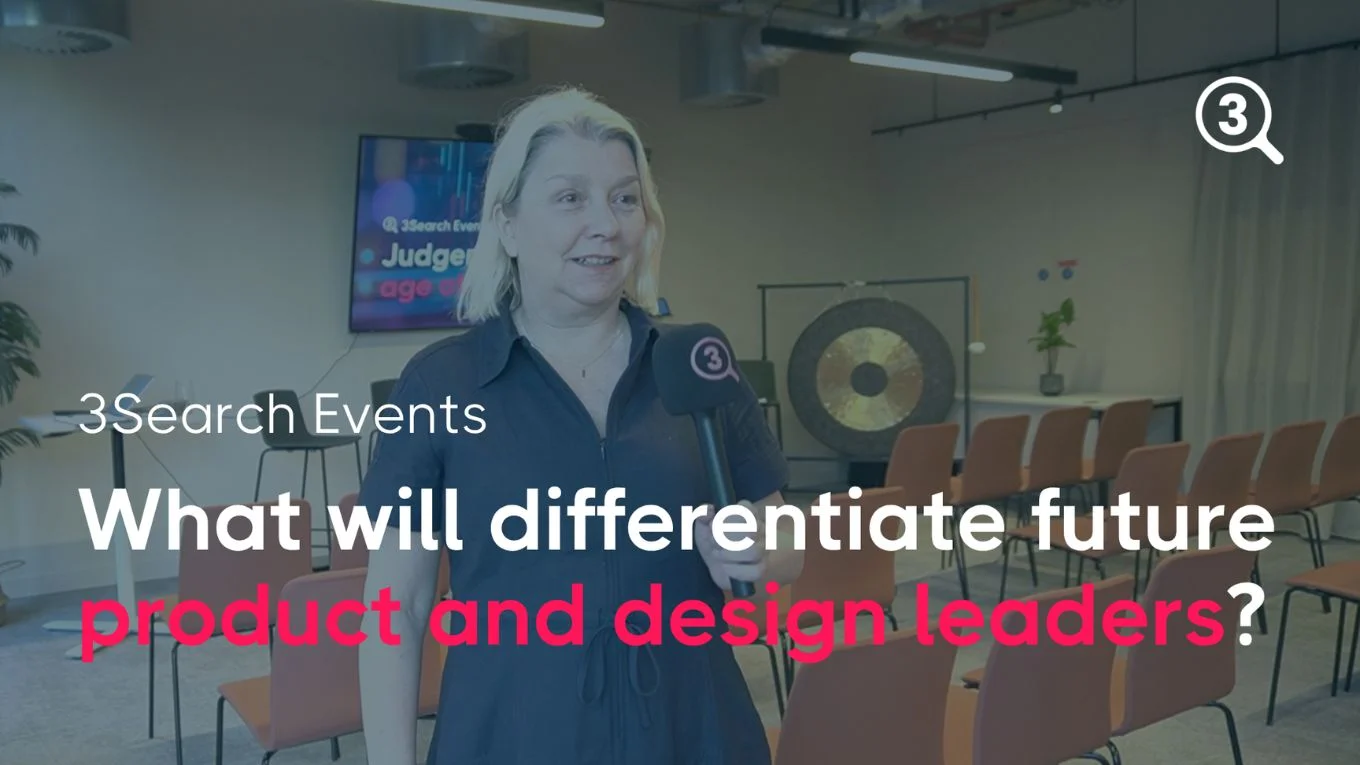
Yasmin Vachet and Francesca Jackson-Burnham discussed this topic at their latest Product Design CoLab event. In this article, we recount the key takeaways from:
- Jane Austin, SVP at Contentsquare
- Faith Forster, Founder & CPO at Discoveree
- Áine McKay, CPO at AutogenAI
Together, they discussed:
- How AI is changing product design leadership
- Strong decision-making is a key skill in an AI-driven world
- Making decisions with incomplete data
Continue reading to understand the full conversation.
How is AI changing judgement?
Artificial intelligence is collapsing the distance between idea and delivery. A significant 76% of professionals believe that AI is improving efficiency and productivity, placing pressure on teams to deliver faster than ever before.
Across product teams, AI has turned output into a commodity. Drafts, UI variations, code, and documentation can appear in minutes (sometimes faster than teams can agree on what they’re trying to achieve). Ultimately, this is changing the fundamentals of product design leadership.
How must product design leadership react
As AI speeds up decision-making, a new leadership challenge is presented: keep the organisation oriented around outcomes, not activity, and make “good” explicit enough that both humans and tools can reliably execute toward it.
Now, what separates strong product and design leadership isn’t pace, it’s decision quality, clarity of intent, and the ability to build trust while everything accelerates.
Decision-making is a key skill
When speed is no longer a constraint, progress is no longer defined by execution. With teams now able to make and ship almost instantly, the compressed timeline leaves far less space to decide whether what’s being built is worth building.
As such, success for product design leadership will now depend on their decision-making skills. This comes as no surprise, with 60% of product professionals saying that AI will make their role more strategic.
Judgement is moving upstream
In practice, AI collapses the gap between intention and output so completely that judgment moves upstream. Leaders must be able to clarify intent, set a quality bar, and make trade‑offs explicit before production begins. Without that clarity, speed simply amplifies noise.
As Jane Austin clarified, “What AI has made very visible often is just lack of strategy or lack of judgment [...] and when you can really make a lot of things very quickly, it can all become apparent that they're just not very good.” In this environment, decision quality becomes the product: the real work is not accelerating delivery, but ensuring that what gets delivered is directionally correct, coherent, and defensible.
Bringing the focus back to the customer
Faith Forster built on this thought, “I think what will become really important is customer understanding. Without that depth of understanding you are going to really really struggle.”
With AI allowing product and design teams to move far quicker, there is an opportunity to action smaller changes that teams originally didn’t have the capacity for or were de-prioritised. Ensuring these align with customer expectations will be the key to success.
How to maintain team alignment
Despite the emphasis placed on high-quality decision-making, the day‑to‑day leadership role has shifted away from making those individual decisions and towards creating and maintaining a shared understanding.
Faith reflected that at the senior level, “90% of my day was spent sharing context, reminding people of the strategy, reminding people of the priorities… and on what basis you make that decision.” This mechanism keeps fast-moving teams aligned as they deliver. In an AI accelerated environment, ambiguity is a real risk. Product and design teams must be reminded of the strategy and goals they are working towards consistently to avoid losing sight of what they’re trying to achieve.
Making decisions with incomplete data
The data you have available to you is often incomplete or still evolving whilst decisions are being made. In a world where you are expected to move quickly through product development, leaders have to be comfortable deciding with incomplete data.
As such, it's more important than ever before to have the disciplined to not wait for certainty. Instead, you should be setting principles, making reversible calls, and ensuring teams understand why those calls were made.
The key to career growth is confidence
Áine McKay shared that it’s “better to make a decision than not.” In her opinion, operating with such conviction is key to unlocking career growth. To help build this confidence, Áine recommended reading ‘How to Measure Anything: Finding the Value of Intangibles in Business’ by Douglas W. Hubbard.
Product and design leadership skills are evolving
Ultimately, AI has made building easier which is why judgement matters more than ever. When output is abundant, the differentiator becomes the ability to set direction, define what “good” looks like, and make trade-offs explicit before teams (and tools) sprint ahead.
For product design leaders, that means building a strong understanding of the customer, and keeping communication clear so fast-moving teams stay aligned to outcomes. It also means getting comfortable with imperfection.
Are your teams ready for acceleration?
Delivery will only continue to speed up as AI becomes more advanced and more available. If you need to upskill your product and design leadership, partner with our expert recruiters who will leverage our unique Advise, Attract, Develop model to ensure you have the right team to grow your business.