
Artificial intelligence is dominating conversations across the digital commerce sector, but where is it actually creating value?
That was the central question explored at our most recent New York event curated for our community of ecommerce and online marketplace managers. Attendees heard from:
- Megan Conahan, EVP at Direct Agents
- Donte McCrary-McClain, Co-Founder & Managing Partner at Willse-McClain Advisory
They discussed everything from AI adoption and agentic commerce to the future of talent in digital commerce. In this article, we’ll be breaking down the key takeaways from their conversation with specialist recruiter, Patrick Murray.
Key takeaways
- AI's biggest impact today is operational efficiency – not replacing creativity.
- Organizations succeed when they start with commercial problems, not AI tools.
- Agentic commerce will reward discoverability, structured data and trust.
- Strategic thinking and executive presence are becoming more valuable than technical execution.
- The future belongs to people who can combine AI capabilities with human judgement.
The biggest AI wins are happening behind the scenes
When AI is discussed in ecommerce, the conversation often gravitates toward headline-grabbing topics:
- AI-generated creative advertising
- Autonomous shopping assistants
- The complete reinvention of shopping experiences
Yet, today, the most valuable applications of AI systems are far less glamorous.
Removing friction from everyday work
Rather than transforming marketing overnight, AI is delivering impact by removing friction from everyday tasks.
As Megan Conahan summarized, "The boring stuff is where AI is killing it for us. All of these repeatable, dull tasks that we have to do, that’s where we’re seeing commercial impact consistently."
There is a wide range of operational use cases already delivering return:
- Meeting summaries and call recordings
- Workflow automation
- Documentation and knowledge sharing
- Task creation and project management
- Reporting and analysis
- Knowledge management across teams
A live example
Megan shared an example of how AI-powered note-taking tools have changed the way her team operates. Instead of manually documenting conversations, briefing colleagues, assigning actions, and drafting follow-up emails, AI is able to summarize discussions, create tasks, and generate communications automatically. The result is less time spent on administration and more time spent being fully present in client conversations.
Productivity gains compound quickly
While these applications may seem modest compared to the broader promises surrounding AI, their impact scales rapidly across teams and organizations. Saving ten or fifteen minutes on every meeting, every report, or every project update creates significant gains over time.
Why most AI programs fail before they start
If there was one message that came through consistently during the discussion, it was that most AI initiatives fail long before the technology becomes the problem. Too often, organizations invest in tools before they've identified what they're actually trying to solve.
AI adoption needs more than good intentions
Both speakers were critical of businesses that approach AI adoption with a vague mandate for employees to simply "go use AI." While well intentioned, the panel argued that this is a “recipe for failure.” The approach often creates confusion, inconsistent adoption, and ultimately poor outcomes.
As Megan explained, asking teams to adopt AI without guidance can feel overwhelming, particularly when employees are at different stages of understanding and confidence. Instead, you should build a clear, structured approach to integrate artificial intelligence effectively into your ecommerce business.
How should ecommerce leaders approach AI integration:
- Identify specific areas where AI can improve performance
- Link AI initiatives to business and team objectives
- Provide employees with clear priorities
- Assess whether additional training is needed
- Create clear goals, frameworks, and KPIs
- Support employees throughout the adoption process
Focus on the problem AI will solve
One of the most insightful moments came when Donte McCrary-McClain was asked how he would advise an ecommerce company prepared to invest $100,000 in AI.
Rather than discussing platforms or vendors, he immediately focused on understanding the business problem first. Before investing in any technology, organizations need to identify where friction exists. That could include:
- Inefficient workflows
- Poor data quality
- Slow reporting processes
- Content bottlenecks
- Communication challenges
- Knowledge-sharing gaps
Without that understanding, even the most sophisticated AI platform risks becoming an expensive solution to the wrong problem.
As Donte warned, organizations chasing "the sexiest dashboard" or the latest trend often overlook the operational issues preventing them from realizing meaningful return on investment.
The real challenge is change management
Technology may capture the headlines, but people ultimately determine whether AI succeeds.
Throughout the discussion, the speakers emphasized the importance of creating clear frameworks, success metrics, and adoption plans. As mentioned above, the organizations seeing the greatest impact are those that start small, focus on specific use cases, and help employees understand how AI supports both individual and business goals.
Training also emerged as a recurring theme. Megan highlighted the need to invest time in educating teams, while Donte argued that organizations should actively reward employees who help drive adoption and share best practices across the business.
Agentic commerce is already here
Many attendees appeared to view agentic commerce as a futuristic version of online shopping – something consumers might adopt years from now. But the panel challenged that assumption.
Ecommerce teams must be optimizing for agentic AI commerce
Agentic commerce refers to AI systems that can research, compare products, and ultimately facilitate or make purchasing decisions on a consumer's behalf. *
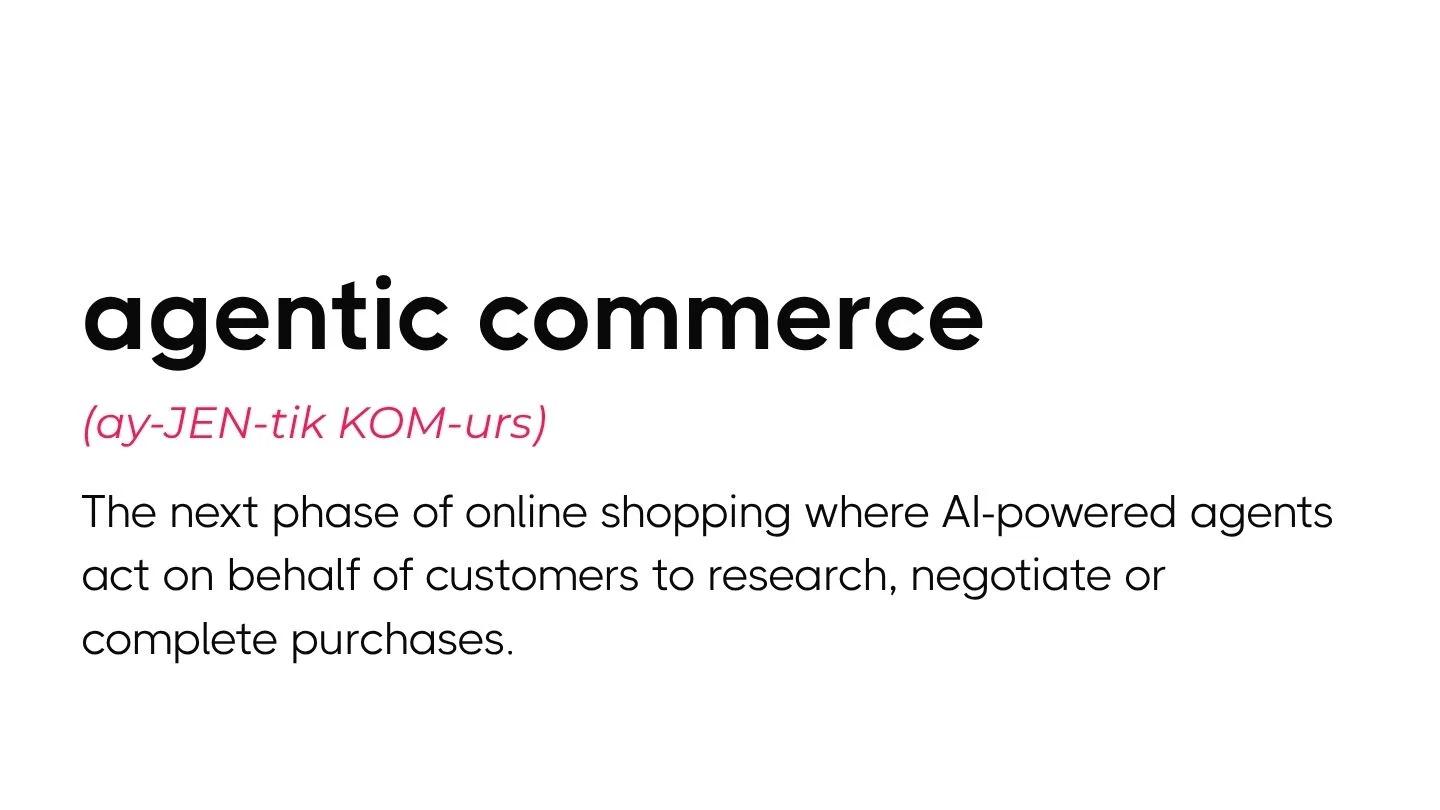
Whether they realize it or not, consumers are already interacting with these systems today. From ChatGPT and Claude to Google's AI Overviews and Amazon's Alexa ecosystem, AI is increasingly shaping how people research products, compare options, and make purchase decisions. As Megan explained, "To me, now agentic commerce is just commerce."
*We explored this topic in more depth at a past event discussing AI use cases in Amazon and online marketplaces.
Consumers are using AI more than they think
Bain & Company estimates 30-45% of US consumers are using generative AI to research and compare products. While relatively few attendees claimed to use AI tools directly for shopping recommendations, our panel argued that many consumers are already engaging with agentic commerce without knowing it.
Google's AI-generated search summaries, Amazon's AI-powered shopping features, and conversational search experiences are increasingly influencing buying decisions before consumers ever reach a product page.
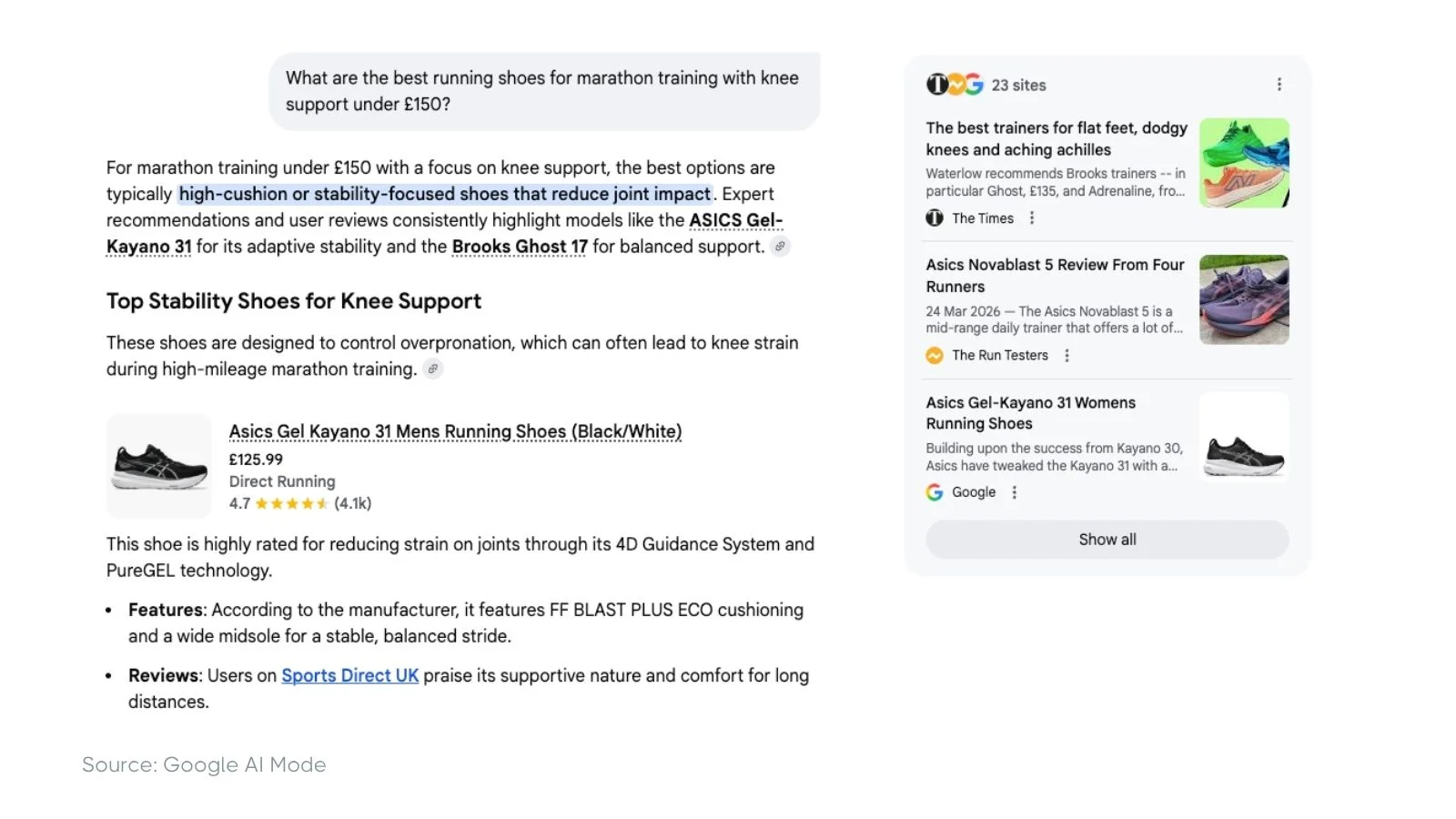
As product discovery is no longer limited to traditional search engines or marketplace rankings, this has a significant impact on modern ecommerce strategies. AI is becoming an intermediary between brands and consumers.
Brands must market to humans and machines
This shift creates an entirely new challenge for digital commerce teams.
For years, brands have optimized their content, advertising, and messaging for human audiences. Now, they must also optimize for AI systems tasked with evaluating products and making recommendations.
Unlike consumers, AI agents are not influenced by creative campaigns, brand slogans, or celebrity endorsements. Instead, they rely on signals that indicate product quality, relevance, and trustworthiness.
Signals for agentic commerce optimization:
- Structured and accurate product data
- Consistent information across channels
- Reviews and customer feedback
- Brand trust and authority
- Clear product use cases and differentiation
While the fundamentals haven't changed, discoverability will become one of the defining challenges of the next phase of digital commerce. Brands that fail to provide clear, consistent, and trustworthy information risk becoming invisible to the systems that are already influencing customer behavior.
How should businesses prepare for AI-driven shopping experiences?
The simplest and most effective way that businesses can prepare for the long-term role that AI will play in their growth is investing in their teams, skills and people. As the tools and software slowly become standardized, the talent you employ will be your biggest differentiator.
The most valuable skills are human
While AI is making many aspects of digital commerce easier, it’s also increasing the value of distinctly human skills. The panel repeatedly argued that the future of the industry will not be defined by who has access to AI, but by who knows how to apply it effectively.
Equally, technical execution is becoming more accessible. Tasks such as reporting, data analysis, documentation, and campaign optimization are increasingly supported by automation. What remains difficult, however, is interpreting information, making decisions with incomplete data, and creativity.
Why judgment and discernment matter more than ever
When asked where humans still add disproportionate value, both speakers immediately pointed to judgment, discernment, and creativity. AI can process vast amounts of information, but it cannot reliably determine what feels right in a particular business context, nor can it draw upon years of industry experience in the same way a human can.
Donte repeatedly referenced the importance of discernment – the ability to pressure-test information, challenge assumptions, and make informed decisions when there is no perfect answer available. As AI-generated outputs become commonplace, these skills will become increasingly important.
How is AI re-shaping ecommerce talent requirements?
For years, the ecommerce sector has sought after specialists – professionals with deep expertise in a specific platform, channel, or discipline. While specialist knowledge remains important, many of the technical barriers that once differentiated professionals are beginning to fall away.
Instead, demand is increasingly shifting toward people who can connect multiple disciplines, understand broader business objectives, and translate complexity into action.
As such, the next generation of leaders will likely be those who can connect commercial objectives, data, technology, and people – not simply execute individual tasks.
There is real growth opportunity in AI
The real opportunity of AI in digital commerce is not in the technology itself, but what organizations do with it.
From workflow automation and AI adoption to discoverability and future talent, the organizations generating the greatest value from AI are not chasing trends or replacing people. They are removing friction, creating better systems, and enabling their teams to spend more time on work that drives commercial outcomes.
How can 3Search help you navigate business growth?
As AI becomes embedded into everyday consumer behaviors, human capabilities are becoming more important, not less. Strategic thinking, judgment, communication, stakeholder management, and relationship-building will increasingly differentiate top performers from the rest of the market.
If you’re searching for your next Amazon, marketplace, or ecommerce hire, get in touch with our specialist recruiters. Leveraging our unique approach to staffing, our headhunters will ensure you engage the right skills required to lead your brand into the next phase of growth.