The path from CRO to CEO has become increasingly common. As boards look for leaders who can drive growth, scale organizations and navigate changing markets, commercial executives are finding themselves in contention for the top role more than ever before. Yet, many aspiring CEOs underestimate just how different the top job really is.
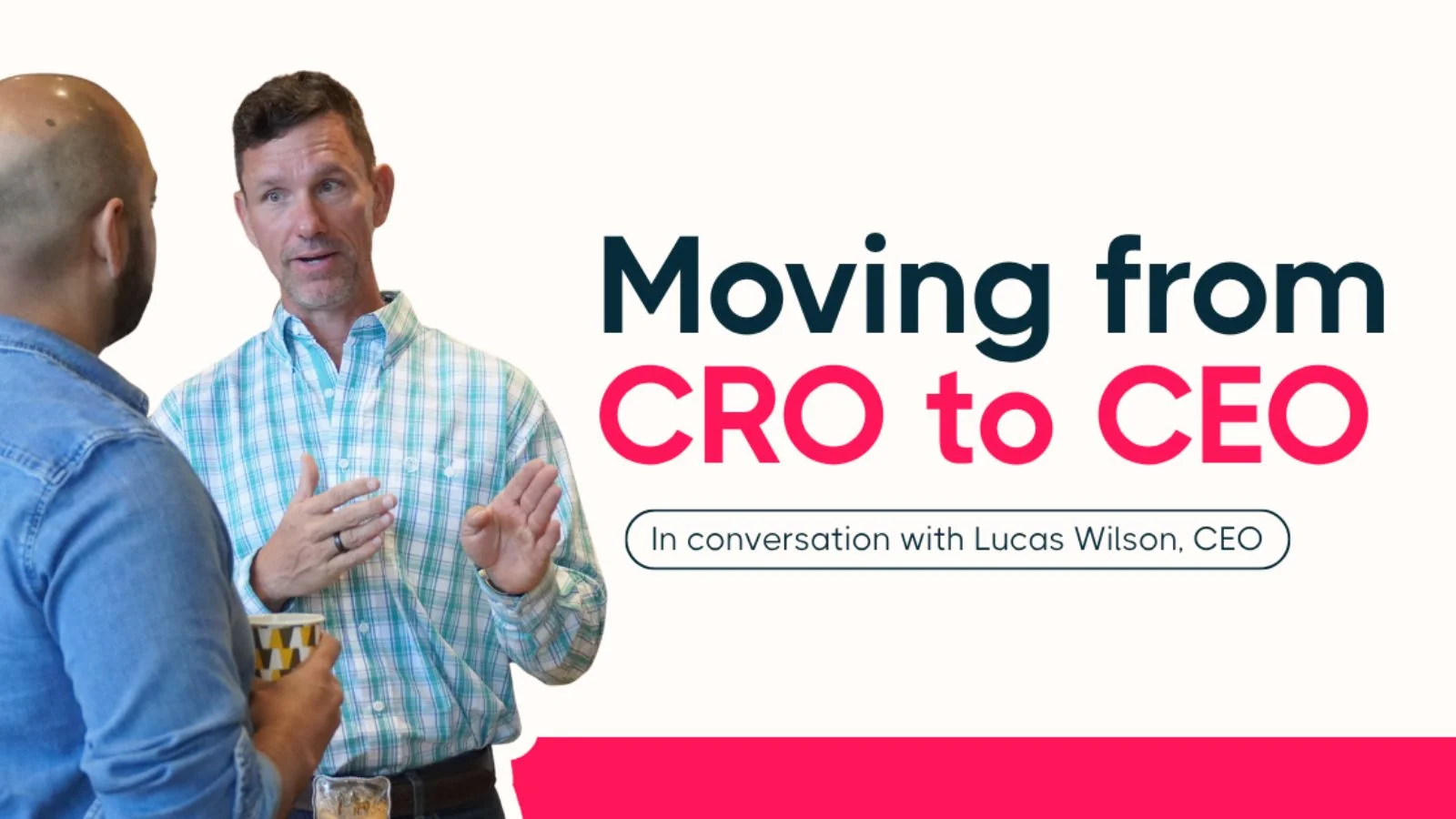
Co-founder, Andy Sellers, sat down with Lucas Wilson, Chief Executive Officer at Signpost AI, to discuss his own journey. This article recounts the key takeaways from their fireside chat.
About Lucas Wislon, CEO of Signpost AI
Lucas was appointed CEO of Signpost AI in 2024, following an extensive go-to-market career in the information technology and services industry, including Chief Revenue Officer roles at EZ Texting and ProSites.
When the conversation began, Lucas admitted that, for much of his career, he believed he was ready for the CEO role. Like many successful revenue leaders, he had built teams, delivered growth and developed strong opinions on how businesses should be run. But stepping into the CEO seat quickly exposed the limits of that mindset.
"What the humbling part to me was, ‘this is not what I thought this was going to be.’”
What followed was a refreshingly candid view of the realities of becoming a CEO.
The CEO role isn’t just bigger than the CRO role, it’s completely different
Many CROs sit closer to business performance than almost anyone else in an organization. They understand revenue, customers, forecasting, hiring, and growth. It is therefore easy to assume that becoming CEO is simply a larger version of the same job.
Lucas thought exactly that.
Reflecting on his pre-CEO mindset, he admitted that for years he believed he was ready for the top role. He had delivered growth across multiple businesses, led commercial teams and, like many ambitious executives, often found himself questioning the decisions being made above him. Looking back, he now laughs at that confidence.
"When I was a CRO, I had everything figured out."
The reality was very different.
The drastic mindset shift
The CEO transition requires a complete perspective change. Success as a commercial leader is often measured through pipeline, revenue, retention, and growth. A CEO, by contrast, must balance dozens of competing priorities simultaneously, many of which have no obvious right answer.
Lucas explained, "I'm going to tell you flat out, as a CEO; nothing is as you think it is. You will look at situations and make decisions, and you think it's where it is, and six weeks later, you're like, ‘well, that didn't turn out the way I thought it would turn it out.’”
Your new responsibilities
What surprised Lucas most wasn't the pressure of the role, but the breadth.
In your CRO career, your focus is naturally concentrated on customers, sales performance, and commercial execution. As a CEO, every function ultimately reports to you, whether you have expertise in it or not. Product strategy, engineering priorities, financial planning, investor relations, company culture and operational effectiveness all become part of the daily agenda.
This is where many first-time CEOs encounter a level of uncertainty. Decisions must often be made with incomplete information, competing stakeholder expectations and significant consequences if they go wrong.
How can aspiring CEOs prepare?
For aspiring CEOs, you must develop enough understanding across every function to make informed decisions, ask the right questions, and set a direction that others can execute against. Even when you’re lacking information and (sometimes) support.
The leaders most prepared for the CEO role are often not those with all the answers. The most successful leaders are those willing to learn quickly, adapt constantly, and accept that the organization's challenges rarely fit neatly within an established playbook.
Why due diligence matters more than ambition
Lucas highlighted the importance of doing your due diligence when considering a CEO role. In this leadership role, you can be personally liable for the organization, so understanding what you’re coming into is critical.
This is especially important if you become a CEO from an external appointment. Research from Heidrick & Struggles shows that just 16% of CEOs in North America were appointed into the CEO role from another company, with the vast majority being an internal move. Lucas suggested that, as this is such a rare occurrence, it can often mean that nobody in the existing leadership team wanted to take on the role.
Understand what problem you're being hired to solve
External CEO appointments often occur when a business needs change. That change might involve slowing growth, organizational restructuring, a shifting product strategy, investor pressure, or broader operational challenges. The key is understanding which problem you are being hired to solve.
For aspiring CEOs, that means going beyond the initial job description:
- What does the board consider success in the first 12 months?
- How is the business performing against their current strategy, metrics and goals?
- Is leadership alignment strong?
- What challenges have prevented previous strategies from succeeding?
The answers to those questions are often more valuable than any discussion about compensation.
Look beyond the business and understand the stakeholders
It's equally important to understand who truly influences the future of the organization.
As a CRO, most relationships are centered around customers, teams, and commercial performance. As a CEO, investors, lenders and the board of directors become equally important stakeholders.
His advice was not necessarily to avoid difficult conversations, but to enter them with complete clarity. Understanding who controls decision-making, how success will be measured and whether stakeholders share the same vision can significantly affect the likelihood of success.
Lucas' advice for aspiring CEOs
To summarize, Lucas had 5 key pieces of advice for the Chief Revenue Officers looking to move into the CEO role:
#1 Build breadth before you need it.
The transition from CRO to CEO is less about becoming better at revenue and more about understanding how product, finance, operations, culture and growth connect. Seek experience beyond your core discipline wherever possible.
#2 Conduct due diligence on the role as thoroughly as the board conducts due diligence on you.
Before accepting a CEO position, understand the business you're inheriting, the challenges you're expected to solve, and the stakeholders you'll ultimately answer to. Not every opportunity is exactly what it appears from the outside.
#3 Stop looking for a playbook.
Every business, market and leadership challenge is different. The leaders who succeed are not those who replicate previous successes, but those who adapt quickly to new realities. As Wilson put it, "The playbook does not work. It only worked one time."
#4 Accept that you won't always have enough information.
Many CEO decisions must be made before you feel fully prepared. Progress often comes from making the best decision available with the information you have, then adapting as circumstances change.
#5 Treat every setback as scar tissue, not failure.
Luca’s final point was that leadership skills are built through experience, mistakes, and resilience. You'll only be able to learn and grow into the role once you’ve accepted your first position. At some point, you just have to go for it.
"The scar tissue is what makes you great."
You may never feel fully ready for the role, and the reality will almost certainly be different from what you expect. But if you remain curious, broaden your experience, ask better questions and learn quickly from inevitable mistakes, you'll be far closer to succeeding than you think.
Looking to progress your GTM career?
3Search is a specialist go-to-market staffing agency who can support the next step in your career. Apply to our latest vacancies and get in touch with our recruiters to learn more about our Advise, Attract, Develop methodology.