

The impact of TikTok on your Amazon business
09 Sept, 2026
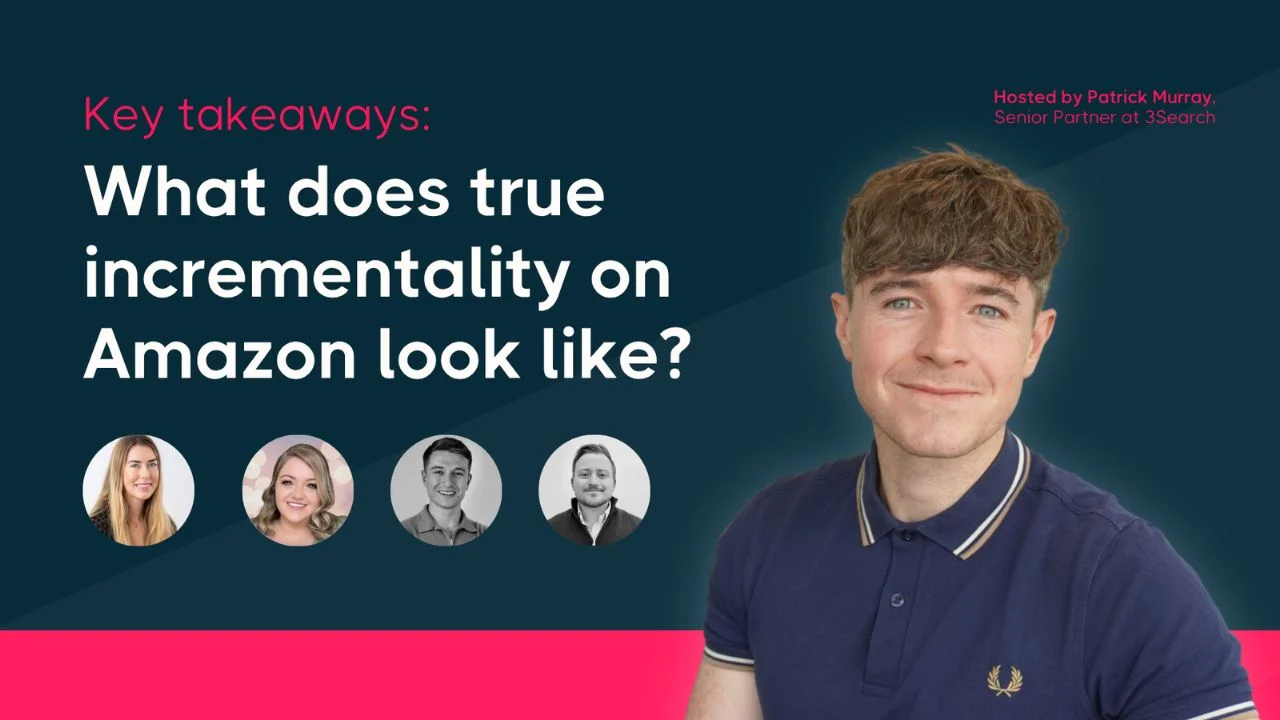
When conversations turn to growth on Amazon, it's easy to focus on the obvious levers – advertising spend, creative optimisation, new formats, and the latest platform innovations. But at our recent event for the Marketplace Community, a panel of ecommerce leaders challenged that thinking.
On Thursday, 3rd September, Patrick Murray hosted our Talks on the Thames event sponsored by POTOO (Protect your brand. Win the Buy Box. Master your marketplace.), SPS Commerce and Xnurta. At our second panel event, he was joined by:
Together they discussed what true incrementality looks like on Amazon. Keep reading for the key takeaways from their conversation.
The term ‘incrementality’ is used frequently across the ecommerce sector, but what does it actually mean? The panel challenged attendees to think beyond straightforward sales growth and ask a more important question: would the customer have purchased anyway?
For many brands, success is still measured through top-line revenue, ROAS or campaign performance. But our panelists argued that increasing sales alone is not necessarily evidence of growth. True incrementality comes from creating demand that would not otherwise have existed, whether that's attracting new customers to the category, changing purchase behaviour or influencing buying decisions across multiple channels.
To reframe your thinking around growth, you mustn’t view Amazon in isolation.
Frederick Smith, Ecommerce Director at SURI, highlighted Amazon's role as both an acquisition and demand-capture channel, explaining that many brands underestimate how Amazon influences wider customer journeys.
"Amazon can be a customer acquisition channel, but it also plays the role of halo capture on DTC channel spend."
The panel discussed how customers increasingly move between channels before making a purchase. They might discover a product through social media, validate it through Amazon reviews, and then buy it directly from a brand website or a retailer. Equally, investment in channels that appear inefficient in isolation can contribute significant value elsewhere in the customer journey.
Several speakers stressed the importance of distinguishing between capturing existing demand and creating new demand. Josh Clarkson, Global Retail Media Director at Mars, challenged the leaders in the room to think critically about whether their investments are genuinely changing customer behaviour.
"Did they just click you because the average consumer doesn't know the difference between a sponsored ad and the product below?"
The discussion highlighted a common pitfall: investing heavily in branded search activity without understanding whether those customers were already intending to purchase. While brand defence remains important, sustainable growth comes from reaching new audiences and increasing market share, rather than repeatedly capturing demand that already exists.
To uncover genuine incremental growth, the panel argued that brands need more sophisticated measurement frameworks. Rather than relying on blended performance metrics, ecommerce teams should build reporting structures that show what is driving genuinely new revenue.
One of the most compelling examples came from SURI's experience with Marketing Mix Modelling.
The business discovered that YouTube activity, which appeared inefficient when judged solely on DTC performance, was actually generating significant value through Amazon sales.
Ultimately, judging channels in isolation can lead businesses to cut investments that create value elsewhere. The brands making the best decisions are increasingly those with the ability to connect customer journeys across multiple touchpoints.
Some of the strongest consensus throughout the session was that many brands are overlooking substantial growth opportunities because they focus on acquisition before fixing the fundamentals.
As Lucy Hart of ghd nicely summarised, "Until you're actually taking action to tackle those problems or even know that they exist, they're going to continue to be a drain on that top line.”
“Sometimes boring stuff can make the shiny stuff even shinier."
For Emily Giraj, Head of Amazon at Learning Resources, the most important growth lever wasn't advertising, content or new product launches. It was simply ensuring that products are actually available to buy.
"One of the first and foremost things, is availability and making sure that you've got that nailed."
The panel discussed how stockouts, inaccurate forecasts, and supply chain issues continue to undermine performance for many brands. Even the best advertising campaigns and product pages can't compensate for inventory problems.
Rather than treating forecasting as a back-office exercise, the panel encouraged brands to view it as a growth discipline, particularly high-priority SKUs and key trading periods.
Seemingly minor operational issues can have a disproportionate impact on revenue. Lucy highlighted Amazon's high-return-rate badge as an example. Products incorrectly categorised within Amazon's catalogue structure can end up displaying return-related warnings that significantly affect shopper confidence and conversion rates.
"That can really kill sales."
What makes these issues particularly challenging is that many teams are unaware they exist until performance has already deteriorated. By the time the problem has been identified, brands are often spending more on advertising simply to compensate for a conversion issue elsewhere in the customer journey.
Rather than waiting for monthly or quarterly reporting cycles, several panellists advocated for shorter, more focused reviews. This should allow you to identify issues before they materially impact performance.
Emily advocated for weekly reviews of high-performing products:
Short reviews allow you to isolate any challenges before they become out of control, whilst not becoming obsessed over minor factors.
For all the discussion around AI, retail media, measurement frameworks and emerging Amazon capabilities, perhaps the most striking takeaway was how often the conversation came back to fundamentals.
Our speakers challenged the idea that incremental growth is the result of spending more on advertising or chasing the latest feature. Instead, sustainable growth comes from understanding what is truly influencing customer behaviour, measuring impact accurately and removing the operational barriers that prevent good products from performing at their full potential.
As brands face rising acquisition costs, greater competition and increasing pressure to prove ROI, the winners will be those who can answer one simple question:
Are we creating genuine incremental growth, or are we simply capturing demand that already exists?
The businesses that can confidently answer that question, whilst maintaining operational excellence behind the scenes, will be best positioned to drive sustainable growth long into the future.
Many thanks to our panel for their time and insights on the day. We also want to extend a huge thank you to POTOO and our fellow sponsors for helping us put this event together. This event is just one of the ways we bring together our ecommerce community.
If you're looking to build your marketplace, ecommerce or digital marketing team, our specialist Amazon and Marketplace recruitment consultants can support your growth.