
A significant 86% of communications professionals told us they were open to finding a new role in 2026. While this number is likely to be slightly weighted due to our position as a recruitment agency, it certainly cannot be ignored by employers.
This article breaks down how you can attract and retain communications and PR talent this year. With data from over 100 professionals – from Communications Managers through to the C-suite – we can reveal what candidates are searching for in their next opportunity.
Key takeaways:
- 86% of communications professionals plan to look for a new role in 2026
- Higher pay is expected with a new role: while 42% cite it as a motivator, it rarely secures the hire on its own
- Progression drives movement: over 60% are motivated by new challenges, career prospects, and promotion opportunities
- Culture and flexibility are decision filters: candidates are assessing how a new business operates, not just what’s offered
- Roles are often undersold: employers that clearly articulate growth, scope, and impact are more likely to convert interest into offers
For more information about the recruitment market in 2026 - with data across the go-to-market sector - download our Annual Pay & Hiring Report.
Communications recruitment in 2026 isn’t simple
While a high percentage of communications candidates are open to a new role in 2026, attracting them away from their current job will not be simple.
Candidates are passively searching
Our data reveals that just 3% of job seekers were out of work. This means a significant 83% of respondents are currently in role (whether permanent, fixed-term, or contract positions).
“For Communications Leaders, this should be a signal to take stock,” says Matthew Stevenson, “Whether you're considering your own next move or managing a team, retention is likely to be a major challenge in 2026.”
On the surface, this data suggests a highly accessible talent pool. However, in reality, candidates are exploring opportunities with:
- More options
- Higher expectations
- Greater scrutiny of employers
For those hiring, the recruitment challenge has shifted. Your focus should no longer be on generating interest but converting top talent into committed candidates and employees. To do this, you need to know what candidates are looking for in their next job.
What are communications professionals looking for in their next job?
The motivations for a job search differ based on job titles. For example, Communications Managers are mostly looking for higher pay, whereas Communications Directors are more motivated by career progression.
When hiring for multiple roles, you need to tailor your approach rather than rely on a one-size-fits-all strategy. Use the below data to understand what motivates each team member.
Key motivations for moving roles by seniority
Seniority level | Increased pay | New challenge | Career prospects | Promotion | Notable pattern |
Director | 14% | 19% | 12% | 7% | Balanced mix of challenge and progression |
14% | 22% | 20% | 4% | Strong focus on challenge and career progression | |
Senior Manager | 11% | 13% | 16% | 5% | Career progression slightly outweighs pay |
Manager | 22% | 8% | 18% | 14% | Pay and progression are key drivers |
Executive | 13% | 38% | 25% | 0% | Strong emphasis on challenge and growth |
Consultant | 25% | 0% | 0.00% | 0% | Pay and contract factors dominate |
Assistant | 33% | 33% | 33% | 0%
| Even spread across early-career drivers
|
Salary is the most important factor when choosing a new company to work for
38% of communications and public relations professionals said that pay was their most important consideration when choosing a new place to work. This is no surprise when less than half of the same cohort received a pay raise in the last 12 months.
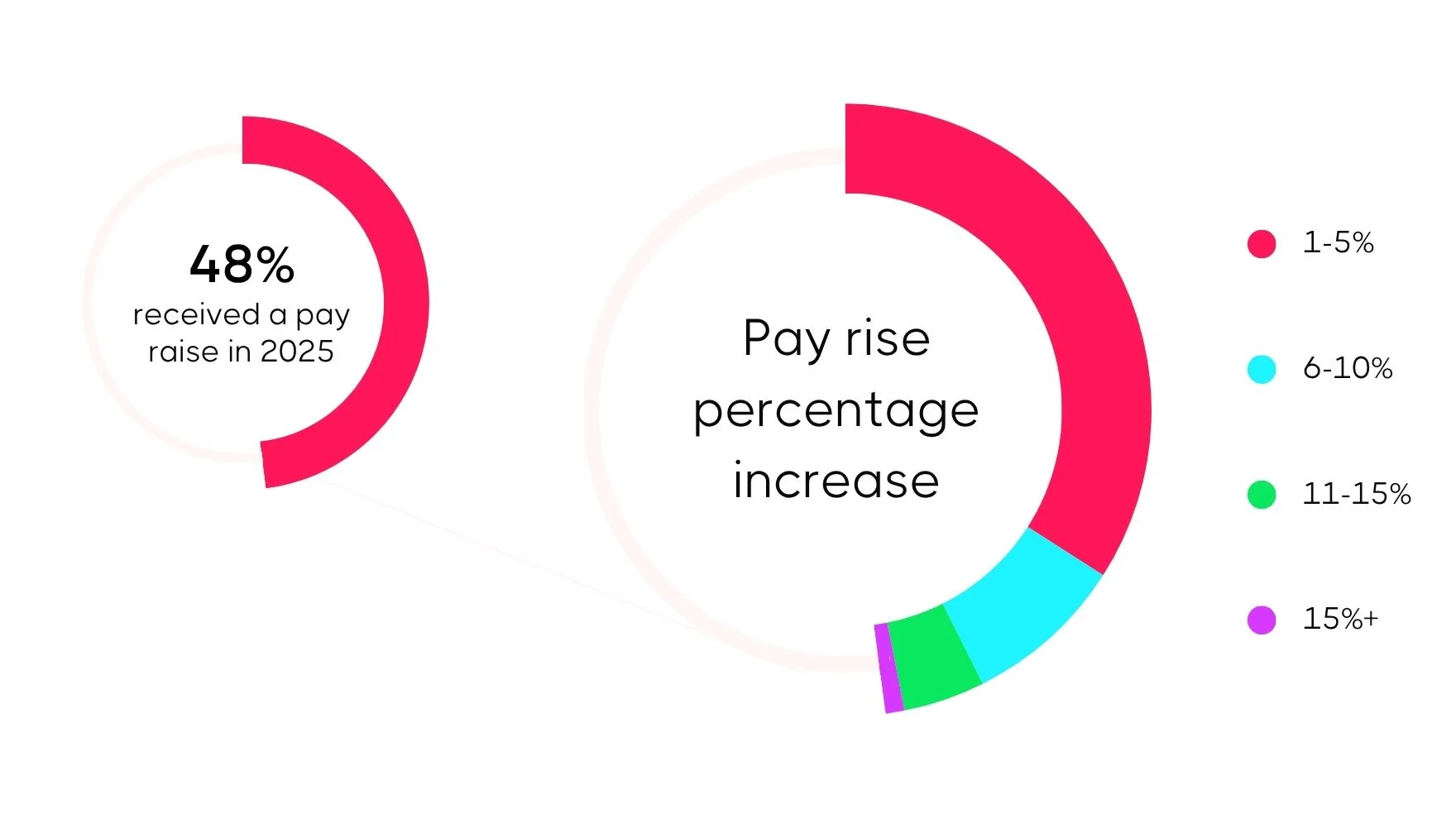
Salary is a crucial consideration for both attracting and retaining Communications Managers in 2026. Businesses should benchmark your communications salaries to ensure they’re paying the market rate.
Career progression is the main reason for a job search in 2026
‘A new challenge’ is the main reason that surveyed communications professionals are looking for a new role. In fact, the strongest motivations for moving roles were:
- New challenge (44%)
- Improved career prospects (38%)
- Promotion opportunities (23%)
With less than 10% of respondents receiving a promotion in the last 12 months, it’s no surprise to see so much emphasis placed on career growth in 2026.
When engaging candidates, hiring managers should clearly articulate:
- How this role will stretch candidates
- What exposure or ownership they will take
- The career progression plan in the next 1-5 years
This is particularly important for more senior hires who are looking for more responsibility in their next moves.
Company culture and flexibility continue to be key factors
Beyond progression, candidates are placing increasing weight on how a business operates:
- 29% cited better company culture as a reason for moving
- 24% cited improved work/life balance
These factors play a key role in determining the final decision, with candidates assessing leadership credibility, ways of working, and flexibility before coming to a final decision.
To secure your desired talent, you should weave touchpoints throughout the interview process to showcase how these factors are experienced day-to-day.
How can you hire communications talent in 2026?
Candidates are selectively exploring new communications opportunities this year, looking beyond salary growth for the first time in recent history. While competitive pay matters, especially for Communications Managers, the strongest drivers of movement are new challenge, career progression, and long-term prospects.
As such, employers must consider how they position these roles. Clearly sharing the opportunity, ownership, and organisation's culture is key, rather than relying on compensation as the main selling point.
Our communications recruiters can support your growth
For further support with role positioning, we recommend working with 3Search for your communications recruitment needs. Our specialist consultants leverage our unique Advise, Attract, Develop approach to ensure you build the right brief and engage the right talent for long-term growth.