Technology has accelerated product development, but it has also exposed cracks in organisational structures. Product leaders are being asked to deliver more value with tighter budgets, leaner teams, shifting priorities and changing expectations around AI. As the boundaries between product, design and engineering continue to blur, what will the most effective product organisations look like over the next five years?
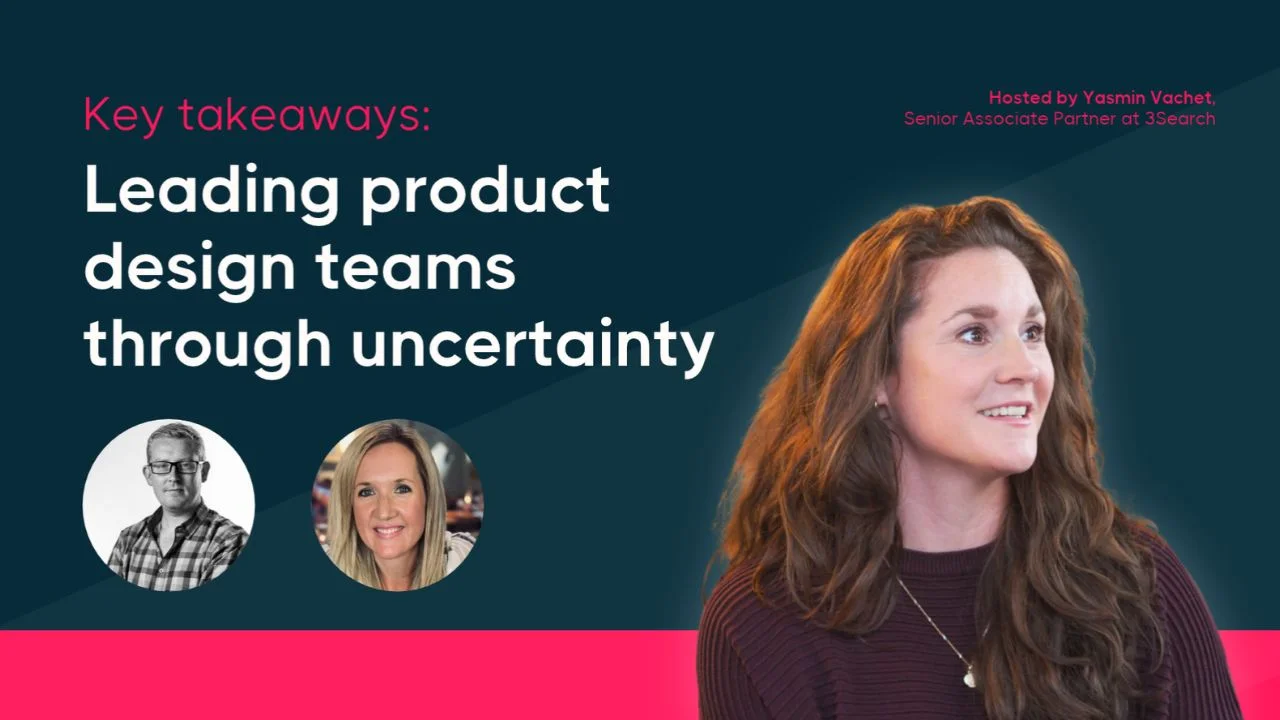
On Wednesday 23rd September, Yasmin Vachet from our digital design recruitment team hosted our latest Product Design CoLab event in our London office. She was joined by:
- Gavin Edwards, VP UX, Design and Research at Trustpilot
- Cath Everett, Senior Director of Product and Content at Welltech
Along with product and design specialists from our network, we explored how senior leaders are redesigning teams, redefining roles and building operating models for the next era of digital products. Here are the highlights from the discussion.
Leading when you don’t have the answers
There’s no doubt that the business world is changing like never before. So how do you build confidence when the ground keeps moving beneath your feet? Change is not a new problem – restructures, layoffs and strategic shifts have always been part of the job – but one thing that is new is the impact of AI.
For this reason, Cath Everett’s role has shifted more towards education. "I think what my role has evolved into in these moments of uncertainty is educating leaders," she said. That means encouraging the board not to assume that certain roles need to be replaced and explaining the trade-offs and risks so that the consequences don't come as a surprise six months later.
Our panel are very much in favour of openness about what they can and can’t solve. Their advice for coping is to focus on what you can influence, or to "control the controllables." Indeed, it’s important for the business to consider the impact of managing change on those immediately beneath board level. After a recent restructure, one company's engagement survey showed that morale was lowest in the layer just below the C-suite, where managers absorb pressure from above while looking after their teams below.
Achieving alignment
With the boundaries blurring between product, design and engineering, how do you align people you don't manage?
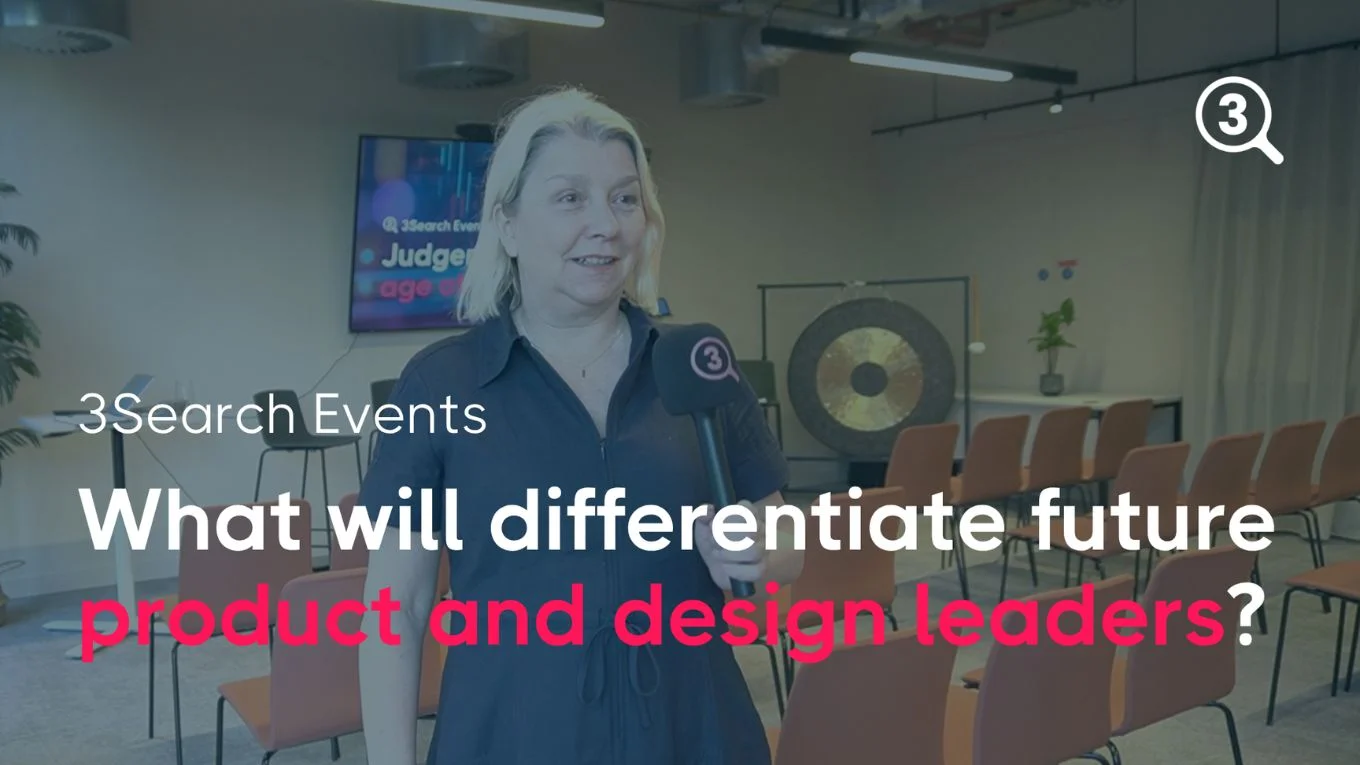
"For me, it's all about relationships,” said Gavin Edwards. “I think it always has been." There was a feeling that storytelling is an important way of building shared understanding across commercial, legal and technical stakeholders. Cath argued that “leadership’s becoming more about judgement. So everything with AI has become faster, we can do more. It's not a question of ‘do we have the resourcing?’ It's ‘are we doing the right thing?’"
Although AI allows teams to be more productive, this raises the possibility that they’ll launch experiments with metrics that don't fit the hypothesis. “That’s genuinely one of the main things that keeps me up at night," said Cath.
Shared ownership of user experience
There was debate over who should own the user experience. There’s an argument that designers are the natural advocates for the user. On the other hand, it could be argued that product teams are defining what you’re trying to achieve as an organisation. Others are wary of the word ‘ownership’ altogether. “If we start saying they’re everyone’s problem, they’re nobody’s,” said Cath.
The panel agreed on middle ground, where the appropriate business owner makes the call depending on whether it's a legal, UX or prioritisation problem. Everyone should then share the objective while being accountable for their own part. “I don’t think any one person or one team can own it,” said Gavin. “I think someone needs to be responsible for making sure the right people are in the room at the right time.” Cath praised hybrid structures that pair domain teams with cross-cutting, user-focused teams throughout the whole journey, from app download to customer service.
Scaling product design with care
How do you decide what to compromise when resources are tight? When you don’t have enough time, money or people, that doesn’t mean you need to lower your quality standards across the board. The panel felt that businesses should let the level of risk determine where they make the most effort.
Cath gave the example of launching in a new market like Japan. Where teams might once have commissioned full localisation up front, they can now machine-translate to test for demand. "As long as we're clear it's a testing phase, as long as we're clear that we're going to come back to it, then we're not going to later just forget and point the finger at somebody," said Cath. Gavin stressed the importance of robust specifications when it comes to experimentation. “Is the hypothesis strong, do we know exactly what we’re going to measure, do we know how we’re going to interpret that data?” It’s perfectly acceptable for an experiment to be “a bit rough around the edges” providing you get the lessons from it.
Although it’s now technically possible to launch in 20 markets, it’s important to take care when scaling. That means being disciplined in your measurement and follow-through.
Focusing on outcomes, not output
The panel warned against doing everything simply because you can. Every feature, experiment and capability should be tied to a clear commercial outcome, such as growing a particular audience segment or launching a new proposition. This ensures “everyone’s pulling towards that shared end result,” said Cath, "not just to move a metric which everyone's interpretation of is wildly different."
There was a feeling that boards and investors sometimes only adopt AI through fear of missing out.
Our panel’s advice was to show progress, demonstrating how teams are working faster, leaner and more efficiently with new tools, rather than chasing one revolutionary outcome. Everyone has access to the same tools, so differentiation comes from how you use them. In health content, that might mean hiring journalists and doctors rather than relying on generic AI output.
Preparing product and design for the future
When it comes to preparing product and design teams for the future, everyone’s accountable. Meaningful shared outcomes will be pivotal to ensuring alignment across the organisation. Against an ever-shifting business backdrop, organisations will also need to be adaptable. Forums like this are particularly important when it comes to discussing shared challenges, increasing understanding and ultimately, reaching those goals.
Bringing together product and design specialists for cross-disciplinary conversation, our Product x Design CoLab has grown to over 700 professionals over the last two and a half years. If you’d like to join us for our next event, or you’re looking to grow your team, please contact our specialist product design recruiters.