
To get started in AI marketing, the Chief Marketing Officer must identify the unique pain points your business is facing. This will allow the marketing team to deliver successful AI-led marketing campaigns.
In this article, we break down some of the ways senior marketers are using the new tools to drive revenue growth, performance and brand awareness.
How should you approach embedding AI into marketing?
For many years, marketers have rushed into new technology without entirely knowing why. Instead, the first thing you need to do is identify a business need – a problem to solve. But what might that business need look like? What kind of problems can AI help you solve?
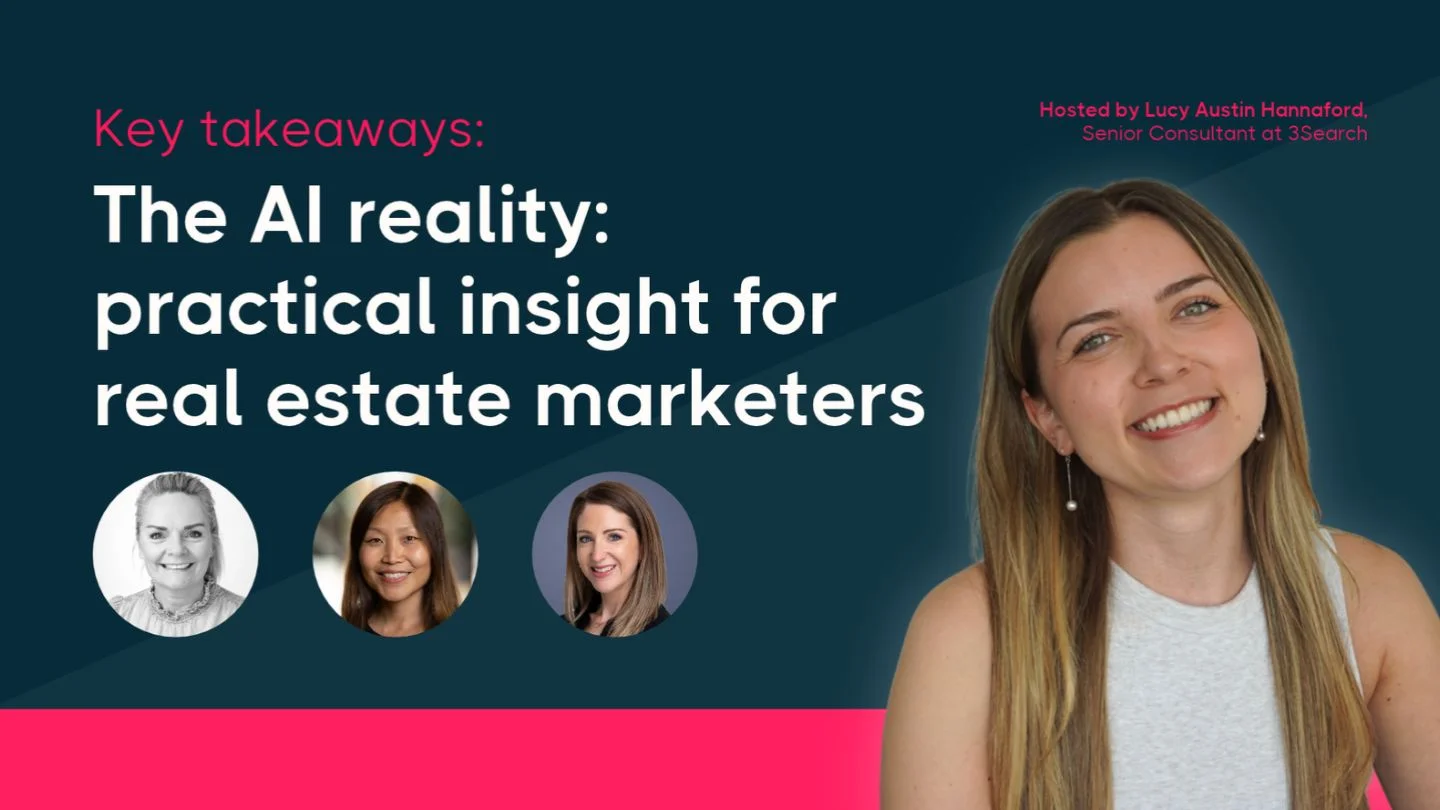
We asked three senior marketers leading change in the AI space:
- Duarte Garrido, Co-Founder and CEO of Dojo AI
- Victoria Rusnac, Founder and AI Coach at Applied AI Academy
- Jada Balster, VP Global Marketing at Perk
4 use cases for AI in marketing:
- Analytics and reporting
- Cost per acquisition
- Content with guardrails
- Replacing point solutions
This article looks at the four main AI use cases they identified that will bring you the fastest results in marketing.
1. Analytics and reporting
Analytics and reporting is a great entry point for scaling AI in your marketing team. This is an area that is prime for AI automation, as you conduct a high-volume of repetitive tasks to analyse structured data that you already collect.
If there's some opposition in your business (as there inevitably will be), then analytics and reporting can also provide the objective proof you need to win over the sceptics and get buy-in from your stakeholders. Using AI for data analysis, attribution modelling and reporting provides objective, quantifiable metrics that demonstrate impact and show the quality of your output.
Crucially, automated analysis also runs quickly, saving you valuable time. By automating repetitive tasks, routine reporting and performance tracking, AI frees up your more creative-minded people to spend less time building dashboards and more time doing things that actually make a difference, such as strategy, storytelling and brand differentiation.
2. Cost per acquisition
AI can lower your cost per acquisition (CPA) by scaling insights instantly across large datasets and treating all marketing channels as a single, connected ecosystem. Instead of looking at SEO, paid ads and website analytics separately, AI analyses them together to find hidden patterns across silos, bringing a number of benefits.
First of all, AI can uncover what actually drives conversions. For example, users who read a specific blog post might be 50% more likely to convert when you retarget them with a specific paid ad. By identifying these high-value journeys, you can ensure the relevance of your marketing content and launch higher-converting campaigns.
AI-driven marketing software can also improve your efficiency by continuously shifting your advertising budget to where it's most effective. Instead of treating SEO and paid ads as separate channels, AI looks at them together to stop you from paying for clicks you would have received for free anyway. If a particular keyword is driving cheap organic traffic via SEO, AI can automatically lower your paid ad spend on that same keyword to eliminate wasted budget.
3. Content with guardrails
AI can be a great tool for content marketing, but only with guardrails It is not a creative silver bullet.
Effectiveness depends entirely on the effort you put in and how you instruct it. If you give it a vague, one-sentence task, you'll get a generic, mediocre result that will not only fail to engage your audience, but also actively alienate them. If you give it a structured process with a quality assurance (QA) loop and clear guidelines, constantly reviewing and refining what it produces, you'll get higher quality work.
For example, instead of asking the AI to write a lengthy report all in one go, break the task into stages. Review the AI's initial draft, give it constructive feedback and get it to revise its own work until it meets the right standard. There should always be significant human involvement in the editing process. Find out more on whether AI is really improving the quality of our outputs.
AI can also be used as a targeted research tool to help a Copywriter become an expert in an unfamiliar topic overnight. But as with any AI-generated content, you'll need to fact-check everything it produces and find relevant, credible sources to back up the information it provides.
4. Replacing tools or agencies
In the long-term, AI will certainly allow you to free up spend on agencies or external tools.
Many organisations buy separate, specialised software tools for specific tasks, whether for tracking keywords, managing bids or generating reports. But over time, that can be pretty expensive. Instead of paying for a bloated, third-party software package, you can build your own custom tools, designed specifically to handle your specific business needs.
This means you can make massive savings on monthly software subscription fees and protect your proprietary data.
How to encourage AI adoption across the marketing team?
For AI adoption to be effective, your need to bring the entire marketing team on the journey. To do this, they need to have the time and space to learn and develop. Giving them sanctioned freedom and guardrails to experiment, will allow them time to build an individual understanding of artificial intelligence. As time goes on, marketing leaders will be able to identify any challenges along the way and understand how to drive team adoption based on the team's culture and needs.
Marketing leaders should:
- Encourage your team to build with AI tools; to ask "stupid" questions of these tools to increase their understanding
- Create time for team members to share their agents and what they've built with them to help educate and inspire others
- Be comfortable sacrificing productivity at this stage of the journey, so expect it to dip before it rises
- Know when to use AI and when not to in order to save time, protect the brand and ensure human creativity
Building your marketing team for the AI era?
Marketing, by its very nature, is all about innovation. It requires constant evolution to continue capturing your audience's attention in an ever-shifting landscape. But don't get tempted to scale AI just because everyone else is doing it. If you're worried about falling behind, don't. Every business is at a different point on their AI journey. You can't do what's best for every other organisation; you can only do what's best for yours.
By identifying a business need, putting in place the right tools to address it and giving your people the controlled freedom they need to expand their AI skills and confidence, you'll give yourself the best chance of success.
These insights were derived from our recent panel discussion on rebuilding marketing for the AI era. If you'd like to join us at our next event, talk to us about the challenges of adopting AI or hire the marketing talent to help you scale AI in your business, please get in touch with our team.